IELTS - One Test. Endless Opportunities
You might meet these requirements when you would like to opt for study abroad programmes, study or work in other countries. As well known, International English tests like PTE, IELTS and TOEFL exist. They are all highly respected, but the difference lies in their structure and content. Hence, choosing a test that best fits you are an issue that deserves more consideration.
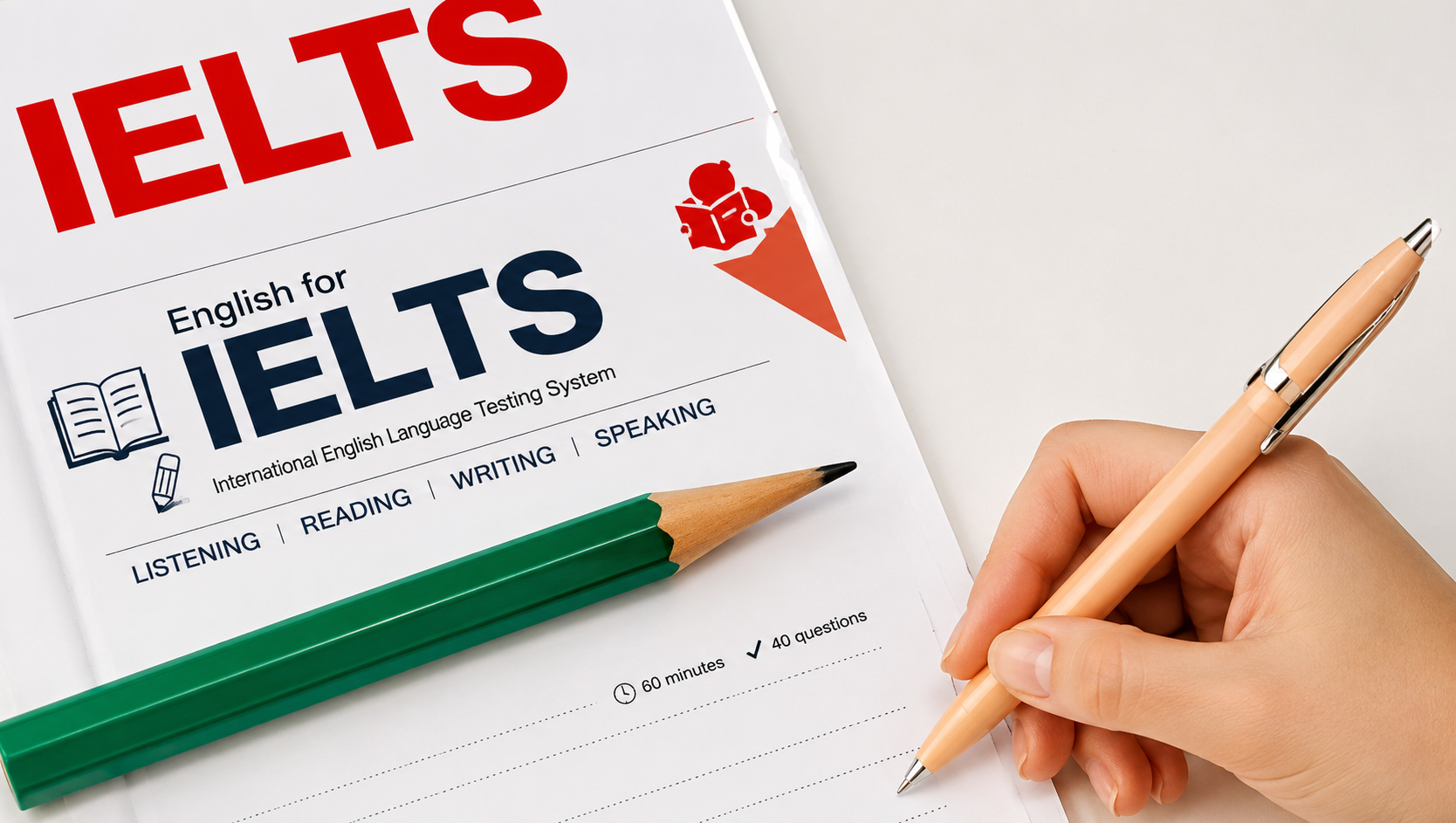
What is the IELTS?
The International English Language Testing System is widely known as one of the tests which determine your proficiency level. The test measures the ability of a person to use English in communicating with the people, receiving their messages, and getting the meaning of what they are saying. One must perform certain activities in the process of taking this test, such as listening to the interviewer, writing a response, and speaking to the interviewer. The International English Language Testing System is extensively used throughout the world by both educational institutions and companies.
There are two primary forms of IELTS:
IELTS Academic
Specifically designed for applicants seeking admission to university programs and higher education institutions.
IELTS General Training
Designed for employment, immigration purposes, and vocational training pathways.
Global Recognition & Format
- Accepted in 140+ countries by over 12,000 organizations, including the UK, US, Australia, New Zealand, Ireland, France, Germany, Netherlands, Spain, and the UAE.
- Format: Listening, Reading, Writing (pen-and-paper or computer), plus a one-to-one Speaking interview with an examiner — the human speaking component is IELTS's key differentiator from PTE.
What Is TOEFL?
The Test of English as a Foreign Language (TOEFL iBT) from ETS is particularly preferred by US and Canadian institutions but is now also accepted in Europe and Asia.
New Redesign Released in 2026
February 21, 2026 Update: ETS has released their most recent redesign of the TOEFL. Key changes include:
- Reduced duration: Now around 90 minutes (previously approximately 2 hours) without a pause.
- New rating scale: A 1.0–6.0 band score (aligned with CEFR standards) will be provided alongside the standard 0–120 score scale until 2028. Your final score is an average of scores in all four sections.
- Adaptive Reading & Listening: Questions are automatically adjusted to your abilities in real-time.
- Introduction of new task types: Such as "Complete the Words" (Reading), "Listen and Repeat" (Speaking), and "Build a Sentence" (Writing).
- Speed up results: Scores are released within 72 hours.
Expected Scores
Most universities expect to achieve a band score from 4.0 to 5.5 depending on the chosen program. Always check with your institution for the required threshold as many schools are still setting them.
Format
Consists of four sections in fixed order – Reading, Listening, Speaking, Writing – delivered only online, including artificial intelligence scoring.
What Is PTE?
The PTE, which stands for Pearson Test of English Academic, is a fully computer-based exam that is marked mainly by AI, while human evaluation acts as control to eliminate bias and provide fast and objective results.
Test Format & 2026 Tasks
- Structure: The test consists of three parts that always appear in the same order — Speaking & Writing, Reading, and Listening — with a total of 52-64 questions in 2 hours.
- Changes in 2026: In the Speaking & Writing section, two new tasks — Summarize Group Discussion and Respond to a Situation — were introduced to assess real-life communication skills.
Marking & Acceptance
- Score Range: One overall score between 10-90 points, along with skill-specific results.
- Turnaround: Available within 48 hours — the shortest marking period among all three exams — which is helpful in case you're applying for college on an urgent basis.
- Recognition: Accepted at more than 3,000 institutions worldwide, such as the UK, Australia, Canada, USA, and New Zealand.
IELTS vs TOEFL vs PTE — Quick Comparison
A quick visual guide comparing the conducting bodies, score formats, durations, and delivery methods of the major tests.
| Feature | IELTS | TOEFL iBT (2026) | PTE Academic |
|---|---|---|---|
| Conducted by | British Council / IDP / Cambridge | ETS | Pearson |
| Scoring scale | 0–9 bands | 1.0–6.0 (new) + 0–120 (legacy, until 2028) | 10–90 |
| Test duration | ~2.5–3 hours | ~90 minutes | ~2 hours |
| Speaking format | Face-to-face/video with examiner | Recorded, AI + human scored | Recorded, AI scored |
| Scoring turnaround | 3–13 days | ~72 hours | ~48 hours |
| Best recognized in | UK, Australia, Canada, Europe, immigration | US, Canada (traditionally), growing globally | Australia, UK, Canada, growing in US |
| Test delivery | Paper or computer | Computer only | Computer only |
Common Ground: What All 3 Tests Have in Common
Regardless of which test you select, certain criteria and formats remain identical across all three options.
No Qualifications Limit
No qualifications are required for these tests. Anyone can sign up, but it’s usually a good idea to be at least 16 years old.
Four Core Skills
It is a test of all four main skills: Listening, Reading, Writing and Speaking. They could be in a different order.
No Pass/Fail Benchmark
There is no one score that means you pass or fail. Each university or country decides what score they want, so you should check what your university needs.
Requirements Vary
These test scores are accepted by places for studying, working and moving to a new country but it depends on the country and the university so you should always check first.
Test Preparation Tips That Work for All Three Tests
Effective study habits to maximize your performance on IELTS, TOEFL, or PTE.
Become familiar with the format and tasks. TOEFL and PTE were revised recently, so use official news for 2026 practice.
Attempt mock tests within strict limits to familiarize yourself with test durations and build mental stamina.
Make a point of reading daily to improve vocabulary and use correct grammar. Newspapers and journals work well.
Listen closely to English news, podcasts, or debates to capture normal-speed conversations and dialogue flow.
Practice speaking at a clear volume daily, ideally with a partner, which is where many candidates lose marks.
Review mistakes made on practice tests and ask tutors or native speakers to review your writing submissions.
Critical Notes
Do not waste precious minutes during the test. Pay close attention to timing, especially for the 90-minute TOEFL layout. Remember that policies differ for individuals whose exemption from the IELTS, TOEFL, and PTE tests may not be applicable depending on the country and university.
Book Your Test
Choose the delivery method that fits your convenience and schedule your exam today.
IELTS Booking
You can take the IELTS test on a computer (Listening, Reading, and Writing on-screen) for faster results and more test dates.
You can also choose the traditional pen-and-paper option (typically scheduled 3 or 4 days per month). A hybrid option is also available where Listening and Reading are on a computer while Writing is paper-based. Speaking is held as a face-to-face session on the same day.
TOEFL iBT Booking
The TOEFL iBT test is computer-delivered, taking about 90 minutes. Results are typically released in 72 hours.
You can schedule your test at an official, certified test center or choose the secure Home Edition which utilizes artificial intelligence for identity and integrity verification.
PTE Academic Booking
The PTE Academic test is fully computer-based, taking approximately 2 hours.
Results are released quickly in about 48 hours. Please note that the test must be booked and taken in-person at an official Pearson test center.